rethinking search: why aeo and geo will matter more than ever in 2026
the way people find things online is changing fast. the old days of ranking high on google through keyword stuffing are gone. as we move toward 2026, two new types of optimisation are stepping into the spotlight: answer engine optimisation (aeo) and generative engine optimisation (geo).
so what are they, how are they different from traditional seo, and how can brands stay visible as ai changes the game?
what are aeo and geo
seo: still part of the story
search engine optimisation is still the foundation. you optimise your pages, keep your technical health in check, earn backlinks and improve visibility. but seo alone no longer guarantees discovery.
aeo: answer engine optimisation
aeo focuses on shaping your content so that ai assistants, voice devices and featured snippets can pull your words directly as the answer. content that is clear, factual and structured is more likely to be used.
for instance, if someone asks “what is neticé’s approach to digital transformation?”, your well-crafted paragraph might allow an ai to respond with “neticé approaches digital transformation by…” and then quote your content.
geo: generative engine optimisation
geo aims to influence generative ai engines such as chatgpt, google sge and bing copilot so that your content is included when they build responses. instead of chasing a single ranking, you want your ideas to be part of the ai’s overall answer.
in short:
aeo means “let me quote you directly”
geo means “let me use you as one of my trusted sources”
they overlap with seo but need a different mindset.
why 2026 is the turning point
a few signs are clear:
gartner predicts a 25% drop in traditional search volume by 2026 as users shift to ai and voice.
search is becoming ai-first. people now expect instant, conversational answers.
generative engines favour content that is fresh, well-structured and credible.
users no longer separate “search” from “asking a question”. the two are blending into one.
brands that do not adapt risk becoming invisible even if their content is strong, because ai systems might not pick them as a source.
building a 2026-proof strategy
think of seo, aeo and geo as three lenses that work together rather than as separate strategies.
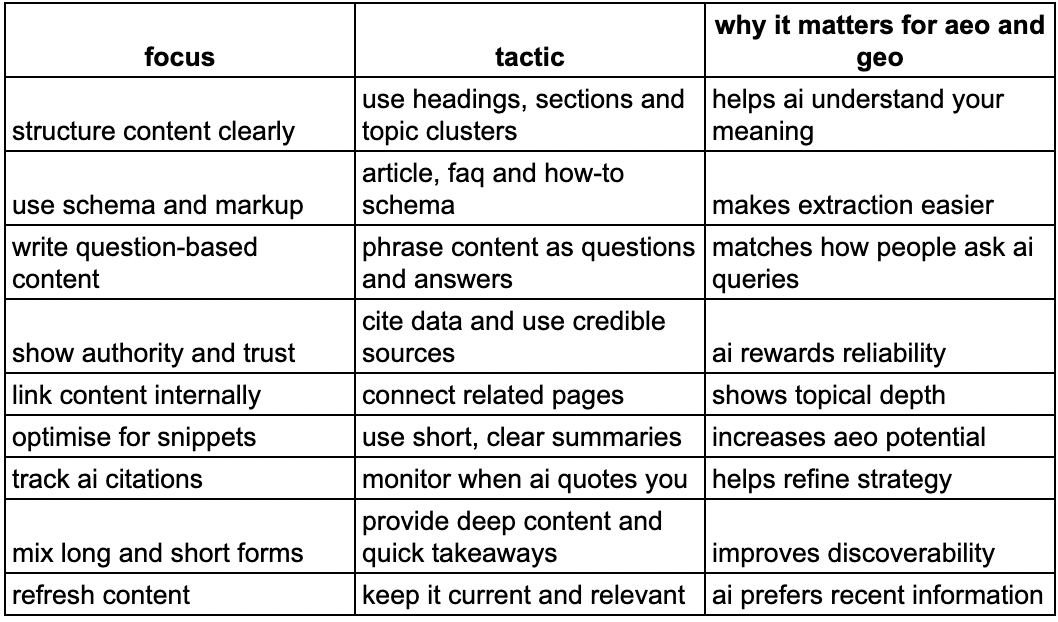
most experts agree that the best approach is hybrid. build your base with seo, then layer in aeo and geo so your content can perform in every search environment.
what this means for neticé and our clients
for neticé, adopting aeo and geo is not about chasing trends. it’s about staying visible in the new landscape and helping clients do the same.
here’s how we can start:
audit what we already have
find high-performing pages and make them aeo and geo friendly by adding clear headings, faq blocks and strong summaries.create content with ai in mind
structure new articles so ai systems can easily understand and quote them.measure visibility differently
look beyond traffic and rankings. start tracking when content is cited or summarised by ai tools.educate our clients
explain the shift in search behaviour and show them why being part of ai answers matters as much as appearing on page one.stay flexible
ai models evolve constantly. keep learning, test new formats and adapt fast.protect our brand voice
manage how ai systems access and use our content, ensuring it remains credited and accurate.
this approach keeps neticé and our clients present wherever people are searching or asking.
final thoughts
in 2026, being visible will mean more than ranking high on google. it will mean being part of the story when ai answers a question.
aeo and geo are the next evolution of search. for neticé, they are a chance to shape how authenticity and performance meet in the ai era. the brands that prepare now will be the ones people find — and trust — tomorrow.
